
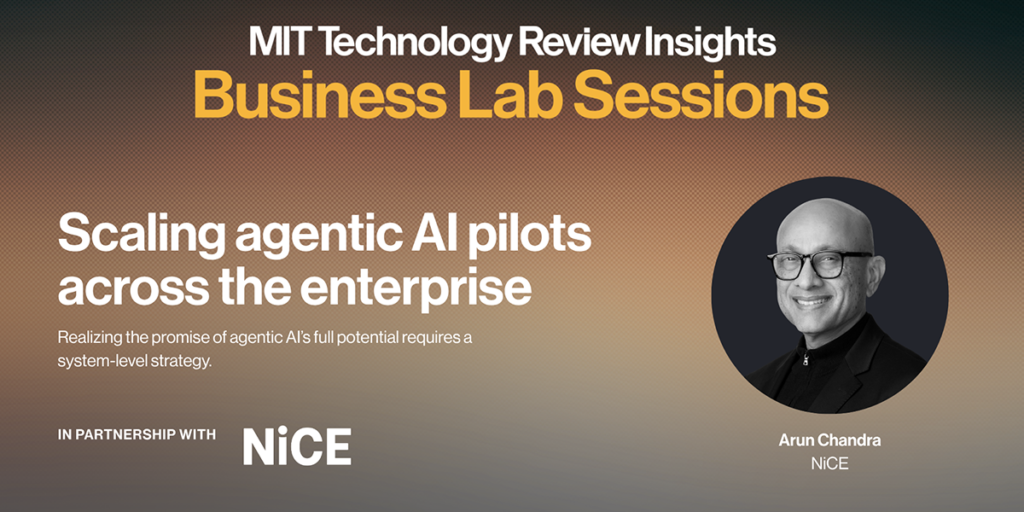
That shift requires organizations to treat agentic AI as a cohesive system. Agents need access to the data, knowledge, and context required to make effective decisions, as well as connections to back-end systems if they are expected to take action. Fragmented information can undermine those capabilities: “The efficacy of these AI agents is purely a function of the context, the knowledge, and the data they can ingest and use,” Chandra says.
The organizational implications are equally noteworthy. Scaling agents can create a new form of fragmentation if teams build isolated systems that don’t connect with one another, while governance, privacy, security, and change management become more important as agents take on more consequential work. Chandra argues that AI agents should ultimately be held to the same standards as human workers, with organizations thinking of their workforce as a combination of humans and AI agents.
Looking ahead, that connected approach could enable agents to work proactively and even communicate with other agents to resolve customer needs. For organizations making the transition from pilots to scale, the priority is not to “boil the ocean,” Chandra says, but to instead build a connected strategy around high-value use cases, workflows, workforce changes, and measurable outcomes.
This webcast is produced in partnership with NiCE.
This content was produced by Insights, MIT Technology Review’s custom content arm, not its editorial staff. It was researched and written by humans, with any AI tools that may have been used limited to production processes under human oversight.